
Roof cleaning & black streak removal
The dark streaks running down an asphalt roof are algae, and the fix is a low-pressure soft wash, never a pressure washer. Here is what causes them in our area, how we treat them and what the roof looks like afterward.
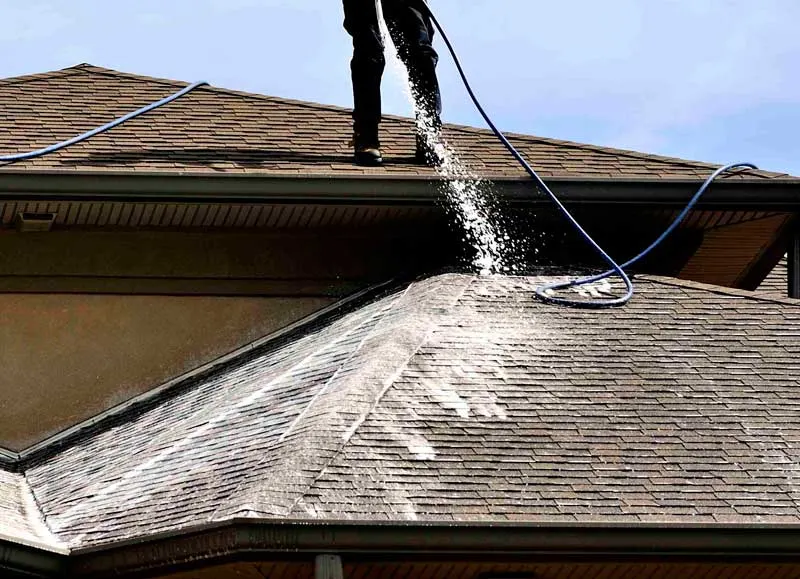
Why Cincinnati roofs streak
Gloeocapsa magma algae spreads by airborne spores and feeds on the crushed limestone in modern shingles. It needs shade and moisture, and the Cincinnati area supplies both: humid summers, about 45 inches of rain a year, and tree canopy over roughly 43% of the city. North-facing slopes and anything under a tree stay damp longest, so that is where streaks start.
Moss and lichen follow on roofs that stay wet, and they do real harm: moss lifts shingle edges and holds water against the roof deck.
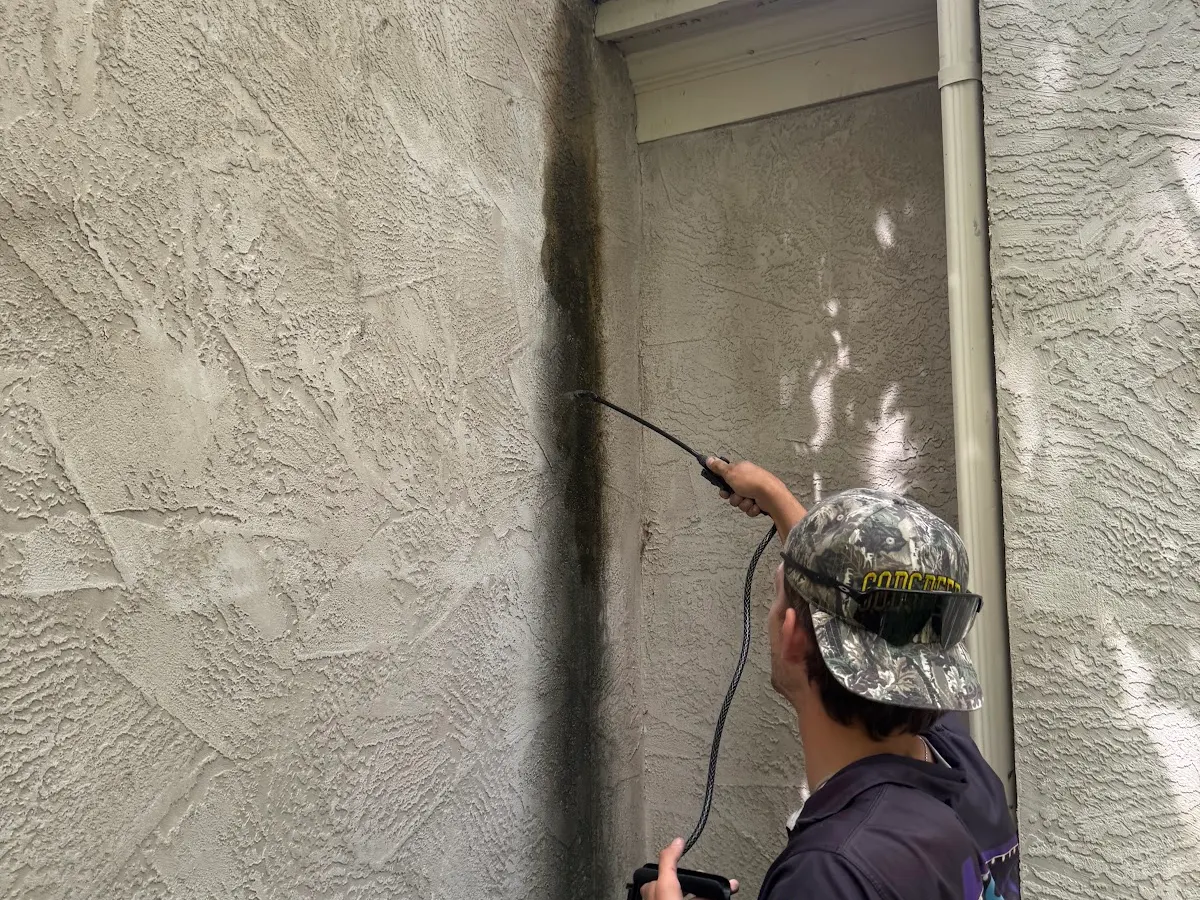
Soft washing, not pressure washing
A pressure washer strips the mineral granules that protect the asphalt and can void a shingle warranty. We apply a roof-cleaning solution at garden-hose pressure, let it work on the growth, then rinse gently from the ridge down. The process the Asphalt Roofing Manufacturers Association describes for algae discoloration is the same low-pressure chemical approach.
- Assess surface type and growth
- Protect plants and openings
- Apply cleaning solution at low pressure and let it dwell
- Gentle rinse and final inspection
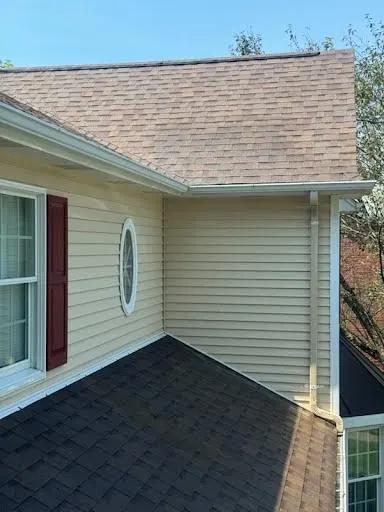
Roof cleaning quotes
- Roof or siding area and height
- Type and amount of growth: algae streaks, moss, lichen or mildew
- Delicate materials (cedar, stucco, painted wood) that need slower work
- Plant and landscape protection around the house
- Whether gutters and downspouts are cleaned in the same visit
Time on site: Most roofs and whole-house soft washes are a half-day job. Results on algae are visible right away; moss and lichen loosen over the following days and rinse off with rain.
Close windows and doors, bring in pet bowls and toys, and point out any plants you are especially careful about so we can cover and rinse them.
Roof cleaning questions
What are the black streaks on my roof?
Almost always a blue-green algae (Gloeocapsa magma) that feeds on the limestone filler in asphalt shingles. It shows up first on north-facing and shaded slopes, which stay damp longest. It is a stain, not rot, but it holds moisture and shortens shingle life if it is left for years.
Will you pressure wash my roof?
No. Pressure strips the granules that protect the shingle. Roofs are soft washed: a cleaning solution applied at low pressure, allowed to work, then rinsed gently. That is also the method the Asphalt Roofing Manufacturers Association describes for algae discoloration.
How long until the roof looks clean?
Algae streaks usually disappear within hours of the wash. Moss and lichen die on the day but loosen over the following days and weeks and clear with rain; we do not scrape them off because scraping damages the shingle.
Is it safe for my plants and gutters?
Plants and beds below the roofline are wetted down, covered where needed and rinsed after. Gutters and downspouts are flushed as part of the job so the solution does not sit in them.
How often does a roof need cleaning?
In the Cincinnati area, shaded roofs typically start streaking again three to five years after a cleaning; sunny roofs go longer. Trimming branches back from the roof slows regrowth more than anything else.
Streaks on your roof?
Send your address and, if you can, a photo of the worst slope. Written quote by text or email within one business day; on-site estimates for larger jobs.
Ready to lose the black streaks?
Free estimates. We reply within one business day. Calls and texts answered 24 hours a day.